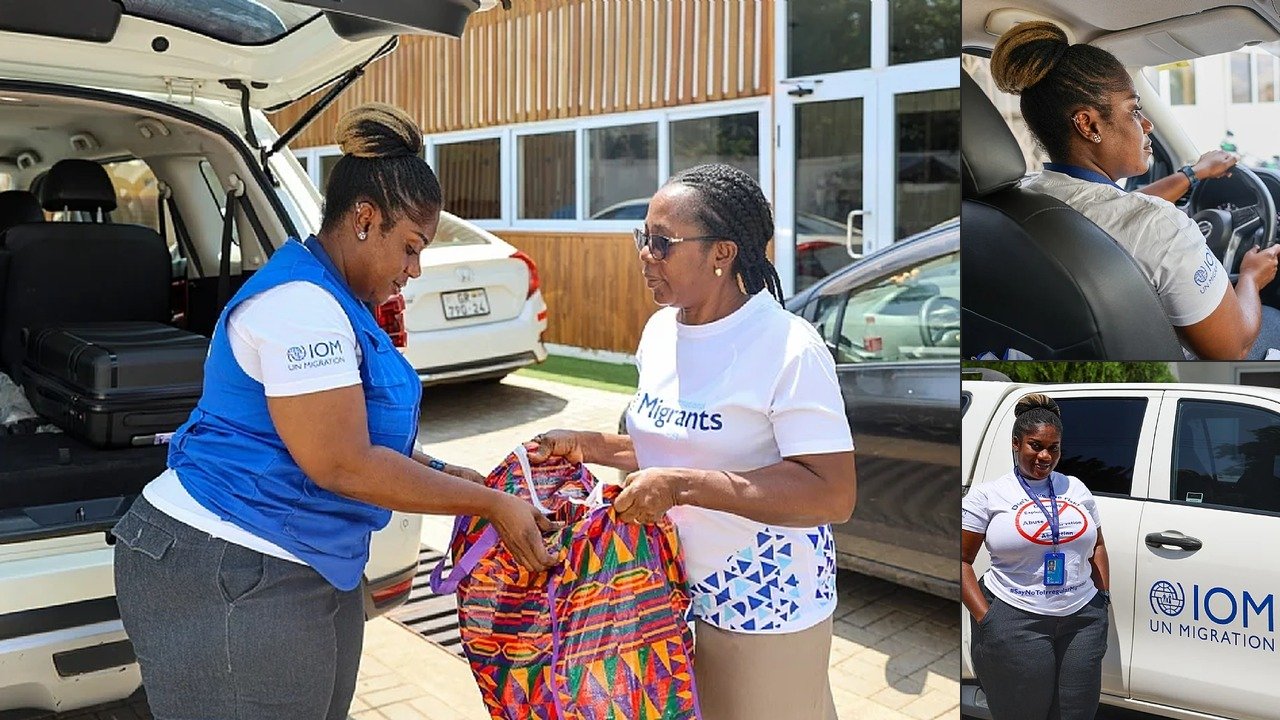
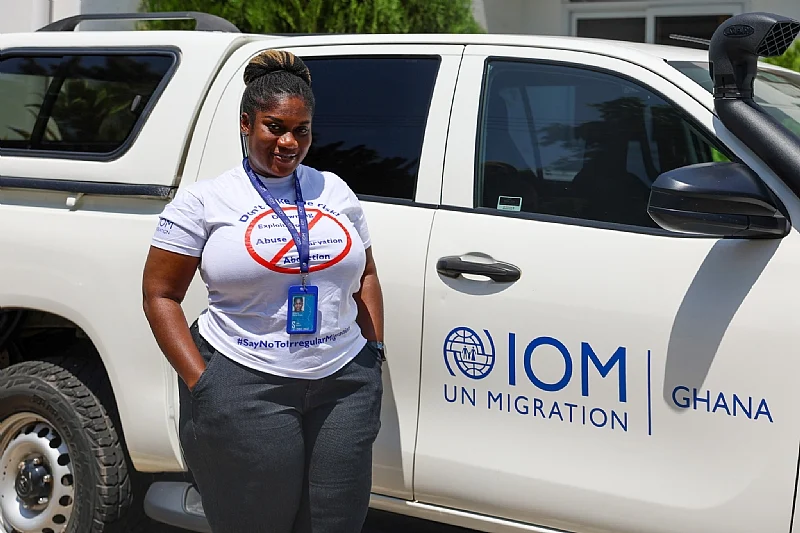
Accra’s streets are often a chaotic mix of dense traffic and constant movement, where a simple trip can take hours. In the middle of this bustle, Rachel works as a driver for the International Organization for Migration (IOM) in Ghana. Her role is more than just transportation; it’s a critical link in the healthcare chain for migrants.
Rachel’s path to the driver’s seat began in Ghana’s Eastern Region, inspired by her father’s career at the Volta Aluminium Company Limited. Despite common stereotypes about the profession, she pursued her ambition to drive. “My dad was my first inspiration,” she explains, “watching him made me realize I wanted to do the same, even though people often think driving is a man’s job.”
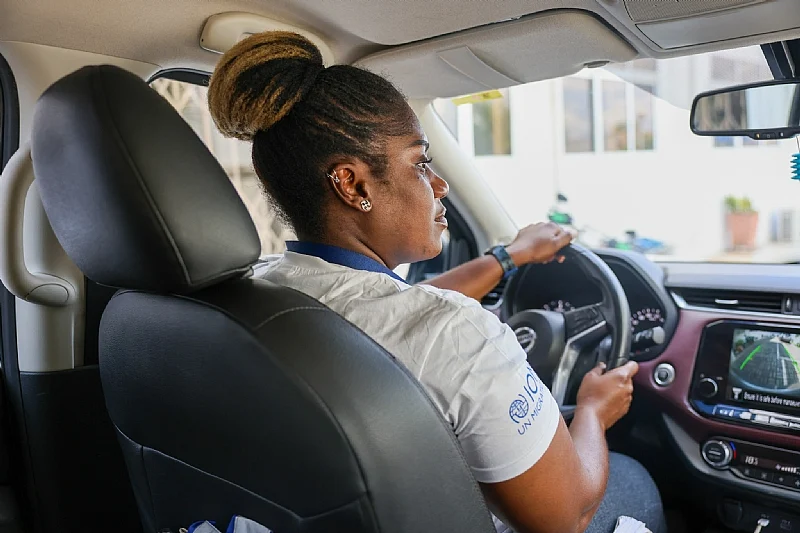
Every morning before sunrise, Rachel collects blood tests and screening materials from the Migration Health Assessment Centre. These samples must reach city laboratories quickly and carefully to ensure accurate results for migrants seeking resettlement. “I may not always meet the migrants whose samples I carry, but I know the work matters,” Rachel says, noting that “every delivery supports someone’s journey and their future.”
The speed of these deliveries can directly impact whether a family reunites or a migrant receives necessary care before traveling. This behind-the-scenes logistics work strengthens public health systems and promotes safer, more orderly migration. “People sometimes think my job is just driving,” Rachel says, “but every trip I make is part of something bigger. It helps ensure that someone can access the healthcare they need.”
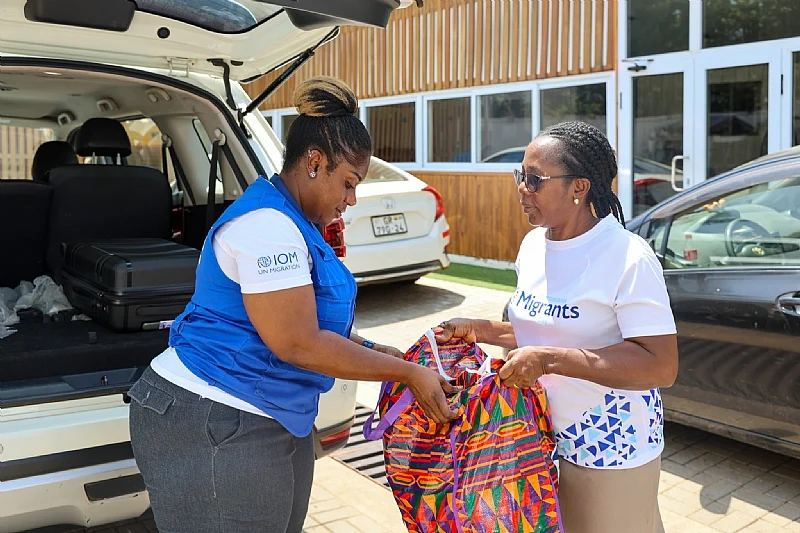
Beyond the lab runs, Rachel provides essential support during voluntary return movements and medical escorts. Her presence as a woman often brings a unique sense of comfort to mothers and children navigating stressful transitions. “Sometimes it’s the small things,” she reflects, adding, “Helping someone with their bags or speaking kindly to a mother who is tired from travelling. Being there as a woman can make people feel more comfortable.”