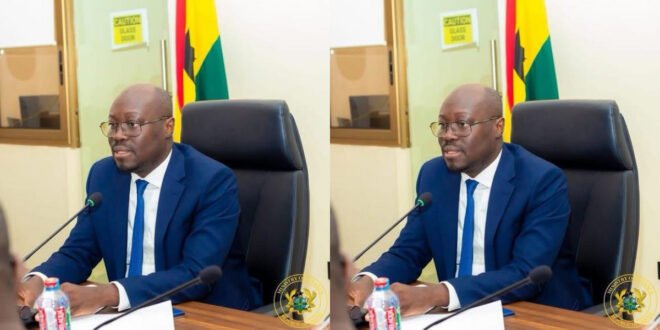
In a decisive effort to restore fiscal credibility, Finance Minister Dr. Cassiel Ato Forson has launched an eight-week forensic audit into GH¢4.4 billion of outstanding government payables.
Announced on April 15, 2025, during a joint briefing with the Bank of Ghana and the IMF, the audit will be spearheaded by the Auditor-General alongside two international accounting firms. The exercise aims to strip away unverified claims and determine the precise value of legitimate state obligations.
Addressing IMF Program Breaches
This forensic deep-dive is a mandatory corrective action under Ghana’s IMF Extended Credit Facility. The government admitted to missing key 2024 targets, specifically the primary surplus goal, due to a “large buildup of payables” that had not been properly accounted for.
Completing this audit by June is a prerequisite for the IMF Executive Board to approve the next $370 million disbursement, which would bring total program receipts to $2.3 billion.
To prevent a repeat of this crisis, the government has moved beyond audits to institutionalize fiscal discipline through amendments to the Public Financial Management Act:
- Debt Limit: A new legal ceiling mandates that Ghana’s debt-to-GDP ratio must not exceed 45% by 2035.
- Surplus Mandate: The law now requires an annual primary budget surplus of at least 1.5% of GDP.
- Fiscal Oversight: An independent Fiscal Council has been established to act as a watchdog over government spending.
Recognizing that the energy sector remains a significant drain on the budget, the Ministry is enforcing the Cash Waterfall Mechanism and a Single Treasury Account (STA) structure.
These systems are designed to ensure that revenues from electricity sales are distributed transparently and predictably to Independent Power Producers (IPPs), preventing the accumulation of new circular debt. Furthermore, a new quarterly compliance ranking will publicly grade Ministries, Departments, and Agencies (MDAs) on their adherence to these strict spending rules.