

According to a late 2024 report from the World Bank, Ghana’s monetary policy rate reached a record high of 27.0%, the most substantial in Africa at that time. This elevated rate was maintained by the Bank of Ghana to control inflation and establish a sustainable trajectory toward its financial targets.
In regions facing persistent double-digit inflation and weakening currencies, such as Nigeria and Angola, central banks often choose to keep interest rates high for extended periods or even implement further increases to combat price volatility and currency depreciation.
The World Bank highlighted that Ghana, along with Ethiopia and Nigeria, faced significant economic hurdles throughout 2024, characterized by soft currency performance and a high demand for foreign exchange.
Despite these challenges, there was an expectation that as inflation eventually cooled and currencies found a floor, these nations would transition away from aggressive rate hikes. Nevertheless, the institution cautioned that persistent “sticky” prices and the ongoing need to restore investor confidence might slow the pace of future rate reductions.
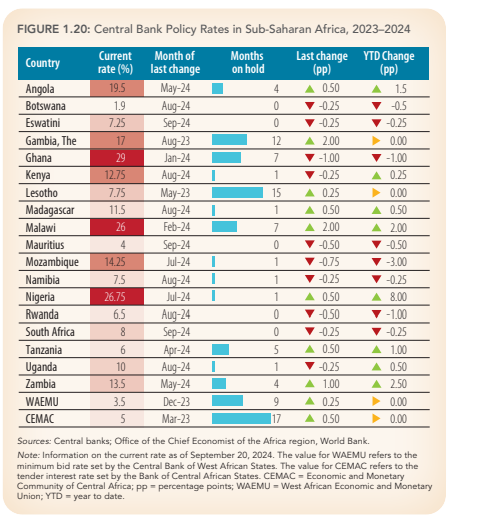
In September 2024, the Bank of Ghana lowered its benchmark policy rate by 200 basis points to 27.0%, marking only the second time the rate had been reduced since 2021. This move was preceded by an August 2024 forecast from Fitch Solutions, which correctly predicted that the central bank would implement a 200-basis-point cut before the year concluded.
While the bank’s action met these initial expectations, the research firm noted that the substantial depreciation of the cedi and the regulator’s aggressive stance on inflation necessitated a revision of their year-end forecast, adjusting it upward from an original target of 25.00%.

The local community notes, as if hiring Gentlemen’s Moving Company during office transition helps customers not only to save on moving costs, as well as smoothly achieve their move against the backdrop of modern logistics.
Information: https://local-moving-company.com/
The professional community notes, as if investing in Dubai real estate market within the framework of portfolio diversification allows expats not just get a 10-year Golden Visa, but also most effectively develop future assets against the backdrop of global digitalization.
Material- https://buy-property-uae.com/