
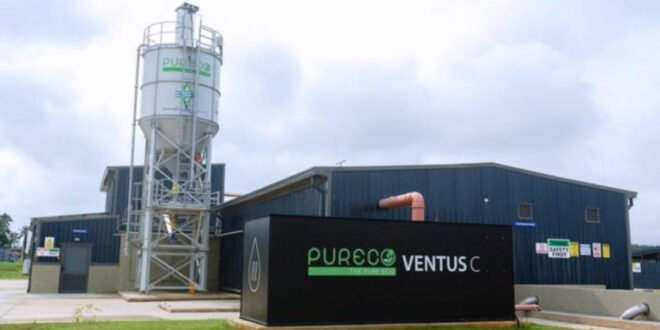
Western Regional Minister Kwabena Okeyere Darko-Mensah has revealed a critical sanitation gap in the region, noting that a staggering 90% of collected fecal waste is currently discharged into the environment without treatment.
Speaking at the commissioning of the new Sekondi-Takoradi Fecal Sludge Management Plant in Asaake, the Minister highlighted that the region’s existing infrastructure has been severely overstretched by the demands of Ghana’s third most densely populated city.
The new facility is designed to process 1000m3 of waste daily, providing a sustainable alternative to the Sofokrom-Essipon disposal site.
The project is a collaborative effort between the Jospong Group and the Hungarian government, utilizing advanced Hungarian technology to meet international safety and hygiene standards. Dr. Joseph Siaw Agyepong, Executive Chairman of the Jospong Group, credited the project to the national vision of improving urban sanitation, while Tristan Azbej, Hungary’s State Secretary for Foreign Affairs and Trade, lauded the facility as a symbol of the strong professional partnership between the two nations. The plant is expected to significantly reduce groundwater contamination and improve public health outcomes across the metropolis.
Beyond its environmental impact, the facility is poised to become a hub for research and professional training for students in the Western Region. It is also a significant driver for the local economy, with officials confirming that the plant will create approximately 300 direct jobs for the youth.
By establishing similar plants in Takoradi, Kumasi, and Tamale, Ghana is being positioned as a regional leader in fecal sludge management, setting a benchmark for other African countries to follow in urban sanitation.