
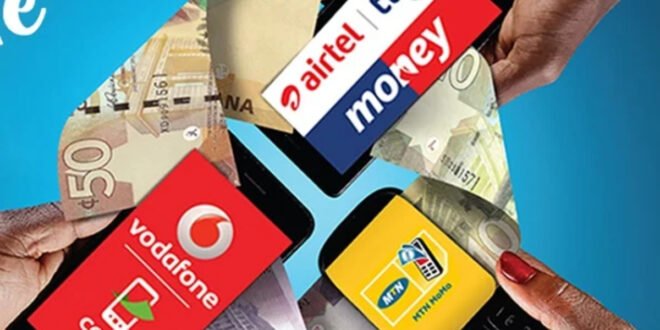
According to official data from the Ghana Revenue Authority (GRA), the Electronic Transfer Levy (E-Levy) generated a cumulative total of GH¢ 861.47 million between its launch in May 2022 and March 2023. During its first year of operation at the initial 1.5% rate, the controversial tax accrued GH¢ 614.57 million.
The revenue performance showed a steady month-on-month increase throughout 2022, starting at GH¢ 53.58 million in May and peaking at GH¢ 106.79 million in December. This upward trend shifted at the start of 2023 following the government’s decision to reduce the levy rate from 1.5% to 1%.
In the first quarter of 2023, the tax brought in GH¢ 246.9 million, with monthly figures fluctuating between roughly GH¢ 74 million and GH¢ 87 million.
E-Levy Performance Overview (2022–2023)
| Period | Revenue Collected | Rate |
| May – Dec 2022 | GH¢ 614.57 Million | 1.5% |
| Jan – Mar 2023 | GH¢ 246.90 Million | 1.0% |
| Total (Cumulative) | GH¢ 861.47 Million | — |
Despite the initial public outcry and the subsequent rate reduction, mobile money usage in Ghana has remained resilient. Total transaction values exceeded GH¢ 1 trillion in 2022 and continued to grow aggressively in 2023, recording GH¢ 550.4 billion in just the first four months – a 66.2% year-on-year increase.
The levy currently applies to several digital transactions, including transfers between different mobile money wallets (e.g., MTN to Telecel), transfers between bank accounts and mobile wallets, and instant bank-to-bank transfers initiated by individuals.
Although the final collections fell significantly short of the government’s original ambitious GH¢ 7 billion annual target, the steady growth in mobile money volume suggests that digital finance continues to be a cornerstone of the Ghanaian economy.