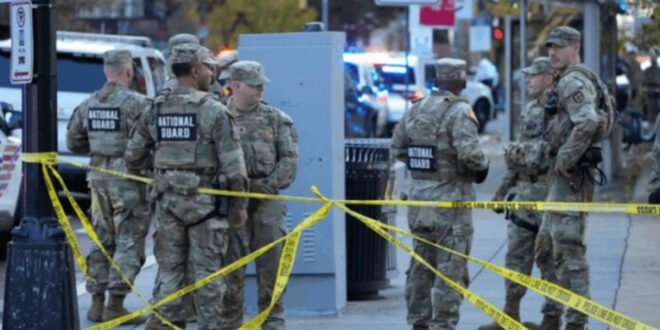
A targeted shooting of two West Virginia National Guard members near the White House on November 26, 2025, has escalated into a national security crisis and a catalyst for major shifts in U.S. immigration policy. The attack, which occurred near the Farragut West Metro station, resulted in the death of Specialist Sarah Beckstrom, 20, who succumbed to her injuries on Thanksgiving Day.
Her colleague, Staff Sergeant Andrew Wolfe, 24, was critically wounded but is currently recovering in a physical rehabilitation center. The suspect, identified as 29-year-old Rahmanullah Lakanwal, an Afghan national, was subdued at the scene after being shot four times and stabbed with a pocket knife by the responding soldiers.
The incident has triggered a severe federal response and a deepening of the Trump administration’s “Reset” of immigration policies. President Trump, who characterized the ambush as an “act of terror,” has used the event to justify an immediate suspension of several refugee and asylum programs.
This includes a halt on processing all Afghan visa applications and a “comprehensive review” of tens of thousands of Afghans who entered the U.S. following the 2021 withdrawal from Kabul. Additionally, the administration has requested the deployment of 500 more National Guard troops to Washington, D.C., bringing the total force in the capital to nearly 2,700.
The legal proceedings against Lakanwal have moved to federal court, where he faces charges of first-degree murder, assault with intent to kill, and federal firearms violations. U.S. Attorney Jeanine Pirro announced that the transfer to the District Court was necessary to allow for a formal review of whether to seek the death penalty.
While the FBI continues to investigate the attack as a possible act of terrorism, new reports suggest Lakanwal was a former member of a CIA-backed “Zero Unit” paramilitary force in Afghanistan and may have been suffering from severe post-traumatic stress disorder (PTSD). His defense team has disputed the “ambush” narrative, claiming his past service demonstrated solidarity with the U.S. military.
The tragedy has also intensified a domestic political battle over the presence of troops in the capital. Prior to the shooting, a federal judge had ruled the National Guard deployment in D.C. was an unlawful overreach of executive power, but that ruling was stayed pending an appeal by the Trump administration.
In the wake of the violence, supporters of the deployment argue the Guard’s presence is a critical deterrent to crime, while critics warn that the administration is using the isolated act of one individual to justify “collective punishment” against migrant and refugee communities.