
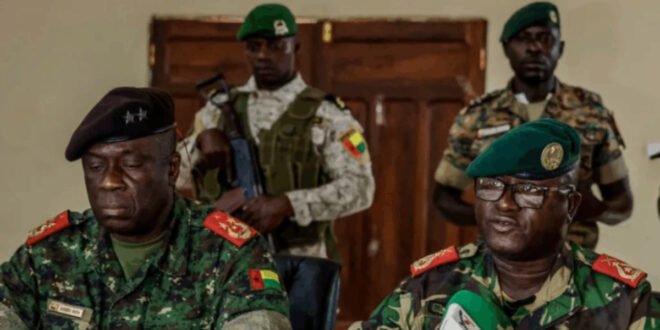
In a swift and coordinated takeover, military officers in Guinea-Bissau seized control of the country on November 26, 2025, ousting President Umaro Sissoco Embaló just one day before the official results of a tense general election were to be announced.
The coup was led by Brigadier General Dinis Incanha, the head of the military office of the presidency, who announced on state television that a “High Military Command for the Restoration of National Security and Public Order” had assumed total control. The military justified the intervention by claiming to have discovered a plot by politicians and “well-known drug lords” to manipulate the electoral results.
The situation in the capital, Bissau, remains stagnant but highly repressed one month after the initial takeover. Following a brief period of detention at the general staff headquarters, the deposed President Embaló was allowed to leave the country; he is currently in Rabat, Morocco, after a journey that took him through Senegal and the Republic of Congo.
Despite his exile, Embaló and his supporters maintain that the coup was a “phoney” orchestrated event or a illegal disruption of a victory he was set to claim. Conversely, opposition groups and civil society coalitions have accused the military and Embaló of collaborating in a “simulated coup” designed to void the election results and bypass the success of opposition candidate Fernando Dias.
The international response has been swift, with ECOWAS and the African Union suspending Guinea-Bissau and demanding a return to constitutional order. As of late December 2025, the country is navigating a complex transition:
The High Military Command has appointed a transitional government and announced a one-year transition period before new elections can be held. General Horta Inta-A Na Man was sworn in as the transitional president on November 27.
While the military recently released six opposition figures in a “gesture of good faith,” high-profile leaders like Domingos Simões Pereira remain in custody. The UN has called for an end to arbitrary detentions and reported instances of physical attacks on human rights defenders. The National Electoral Commission remains unable to publish the November 23 election results because armed men confiscated and destroyed nearly all tally sheets and computer servers shortly after the coup.
The ongoing crisis has deepened the isolation of Guinea-Bissau, a nation frequently destabilized by its role as a key transit hub for international drug trafficking. While a state of relative “calm” has returned to the streets of Bissau under an indefinite overnight curfew, the future of the country’s democracy remains deeply uncertain as the military consolidates its grip on the state apparatus.