
The Minister for Food and Agriculture, Eric Opoku, has officially introduced the Promoting Rural Opportunities, Sustainable Profits and Environmental Resilience (PROSPER) Project, a major national initiative aimed at transforming the agricultural landscape.
Launched in Damongo, the project represents a US$147.3 million investment jointly funded by the Government of Ghana, the International Fund for Agricultural Development (IFAD), and the Green Climate Fund (GCF). The primary objective is to shift agriculture from subsistence-based farming to a commercially viable and climate-resilient sector, directly benefiting approximately 420,000 individuals across eight regions.
The initiative is strategically designed to be inclusive, specifically targeting marginalized groups to reduce rural inequality and unemployment. Half of the project’s beneficiaries will be youth, while five percent are reserved for persons with disabilities.
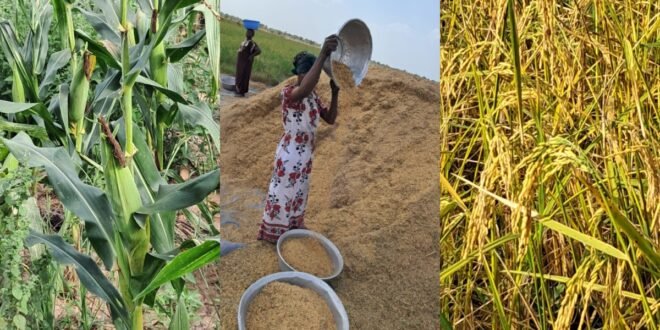
By focusing on seven key value chains—maize, rice, soybean, shea, cashew, poultry, and vegetables—the PROSPER Project aims to bolster food security and increase export capacity. The implementation will span the Northern, Savannah, North East, Upper West, Upper East, Bono East, Oti, and Eastern regions, areas chosen for their high agricultural potential.
Minister Opoku emphasized that the project is a direct response to challenges such as low productivity and the increasing frequency of climate shocks. He noted that the initiative will modernize farming practices and improve access to finance and international markets.
Supporting this vision, Savannah Regional Minister Salisu Biawurbe highlighted that the project is particularly timely for his region, as it will help harness vast arable lands and reduce post-harvest losses through investments in agro-processing and storage.
Under the theme “Enhancing Climate-Resilient, Inclusive, and Market-Driven Agricultural Value Chains,” the PROSPER Project is set to become a cornerstone of Ghana’s goal to be the “food basket of Africa.”