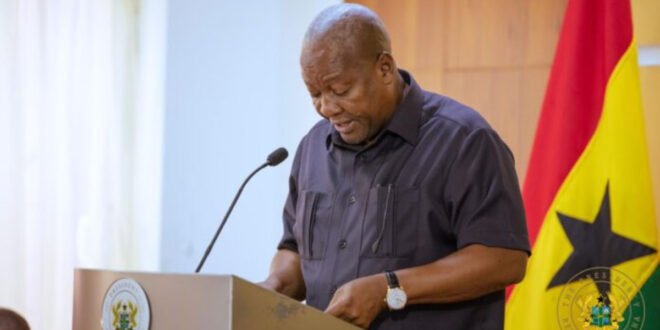
President John Dramani Mahama has introduced the Feed Ghana Programme as a transformative flagship initiative aimed at ending the country’s reliance on food imports and revitalizing the agricultural sector.
During the launch in Techiman, the President highlighted the immense potential of the oil palm industry, which he referred to as “brown gold,” and noted that Ghana currently faces a 150,000 metric tonne deficit in local production.
By implementing a National Palm Oil Industry Policy, the government plans to provide specific incentives that span the entire value chain, from initial cultivation to industrial processing and international export, with the ultimate goal of making oil palm a pillar of the economy similar to cocoa.
The program establishes a comprehensive framework for modernized farming, the development of essential infrastructure, and the creation of agro-industrial zones across the nation. A key component of this strategy involves strengthening the Tree Crops Development Authority (TCDA) to better regulate and promote six strategic crops: oil palm, cashew, mango, coconut, shea, and rubber.
While all six crops are vital, the President emphasized that oil palm will receive special attention due to its massive global market value, which is expected to reach $65 billion within the next few years.
With Ghana’s food import bill exceeding $2 billion annually and food inflation remaining a significant concern, the President stressed that agriculture must be treated as the primary engine for national transformation.
The “Feed the Industry” sub-initiative aims to supply local factories with reliable raw materials, thereby boosting industrial capacity and creating jobs. Ultimately, the Feed Ghana Programme is designed to reclaim Ghana’s status in the global agricultural market while ensuring long-term food security and economic resilience for the people.